Precision
Small differences in placement and timing can determine whether a task succeeds.
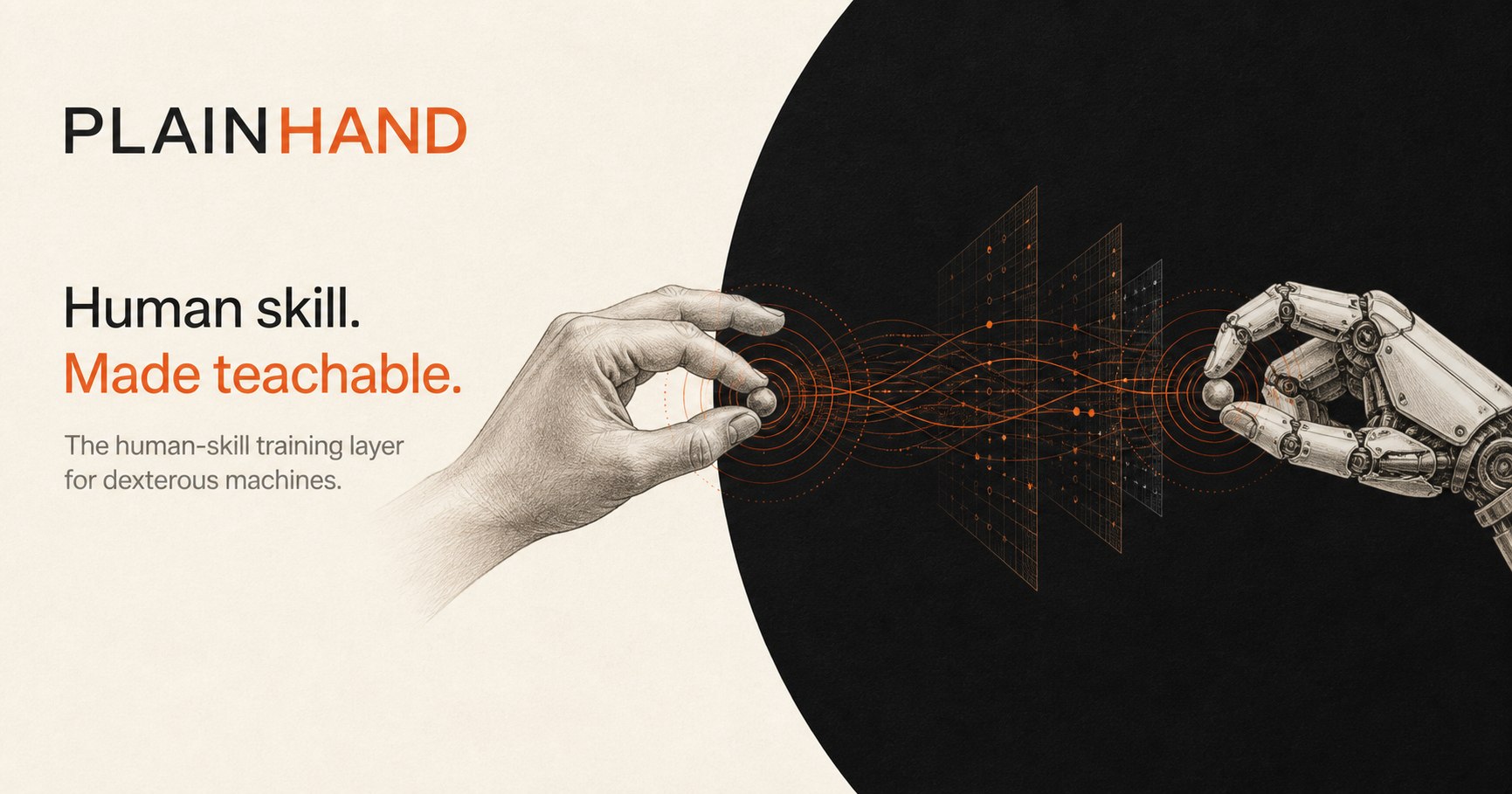
The human-skill training layer
PlainHand is developing the software, evidence systems, sensing, and future data instruments that could help dexterous machines learn more from human expertise.
Early research stage · Performance advantages are not yet claimed
NOW Phase One evidence program
DESIGNED Matched baselines + reproducible measurement
See the research statusPlainHand is not building another generic robot company.
The problem
Physical skill is not a visible path alone. It includes force, contact, timing, correction, and recovery, which ordinary recordings often miss.
Small differences in placement and timing can determine whether a task succeeds.
Machines must respond to the physical world, not only recognize what it looks like.
Useful dexterity spans approach, contact, adjustment, and release.
A learned skill matters only when it remains dependable as conditions change.
What we are building now
Current work starts with controlled software experiments. Each extension has to earn its place against a strong baseline.
A governed test of whether coherence can make recorded multimodal demonstrations more useful.
Explore this research direction ↗02UNDER INVESTIGATIONKeep every sense available while changing how strongly each one influences a prediction.
Explore this research direction ↗03RESEARCH EXTENSIONTest fixed, adaptive, and conventional structures under the same held-out rules.
Explore this research direction ↗04RESEARCH DIRECTIONAsk whether bounded computational agents can discover useful organization without adding unjustified complexity.
Explore this research direction ↗05WORKING REPRESENTATION HYPOTHESISTest whether small pieces of physical interaction can become reusable units that transfer across objects and tasks.
Explore this research direction ↗06PROPOSED HYPOTHESISAsk what reusable relationships can be learned from the variation among only a few successes.
Explore this research direction ↗07RESEARCH EXTENSIONTest whether physical interaction can produce a policy from which a predictive world model is later recovered.
Explore this research direction ↗08RESEARCH EXTENSIONTest whether useful structure survives contact events that permanently change the state of the world.
Explore this research direction ↗How the system grows
The long-term platform compounds software evidence, selective sensing, proprietary physical data, and correction without assuming every layer will pass its gate.
Test the learning thesis with compatible recorded data.
Build only what the evidence says is missing.
Capture synchronized contact, force, pose, and motion.
Execute, measure, and generate new interaction data.
Turn failures and human corrections into new training records.
Why the data matters
The ambition is not simply to collect more demonstrations. It is to test whether each interaction can teach the system more useful, transferable physical structure.
Stable intervalMeaningful changeNew interval
Research proof standard
A mechanism matters only if it improves a defined outcome under fair comparison and survives an attempt to disprove it.
Compare against matched conventional alternatives, not weak strawmen.
Keep confirmation data separate from mechanism discovery and tuning.
Require the core selection effect to survive in a second compatible architecture.
Stop, narrow, or defer a claim when the evidence does not support it.
Intended domains
These are fields where physical skill matters and small errors carry real cost. They are intended applications, not validated PlainHand deployments.
Careful, repeatable work in environments built for people.
Tasks where small changes in placement, timing, or contact can alter the outcome.
Delicate, variable, and procedure-driven physical workflows.
Specialized work in settings that are difficult to standardize.
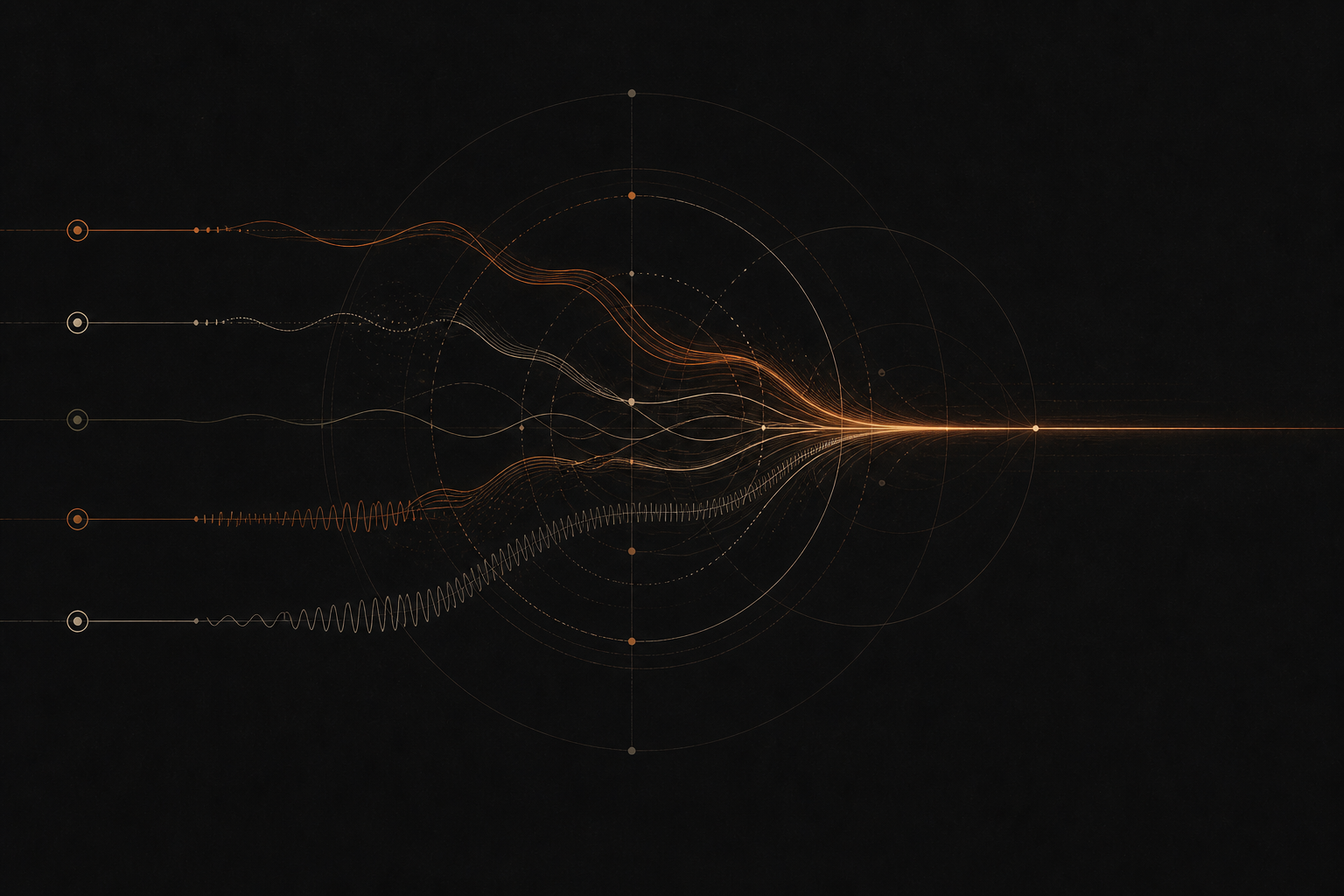
Why now
Foundation models are moving into robotics. Hardware is improving. Public multimodal datasets and accessible compute make the learning architecture testable now. The remaining constraint is whether machines can learn precise physical work with enough context, efficiency, and reliability to be useful.
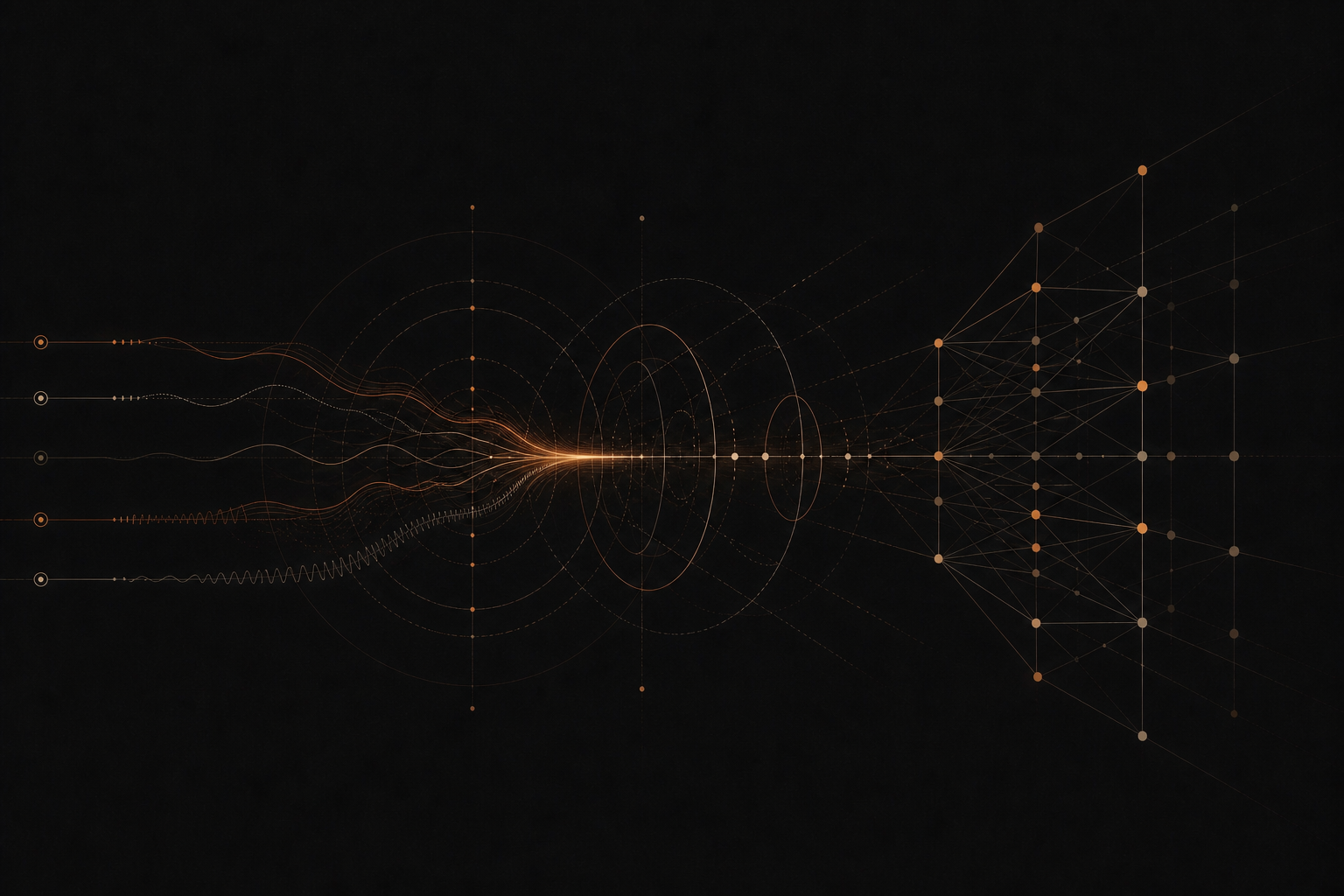
Human skill becomes teachable structure
The PlainHand approach
PlainHand turns physical skill into a testable learning system. The diagrams show how demonstrations, sensor signals, evidence gates, and transfer tests fit together. The status ledger separates planned work from demonstrated results.
Read the evidence statusThe company
What if human physical expertise could become a durable resource for machine learning?
PlainHand turns that question into software experiments, evidence infrastructure, selective sensing, and future data-generation tools. The company is led by founder and CEO Levi Ezagui.
The research de-risks the company direction; the company compounds the research into durable technology and data assets.
Explore the companyWork with PlainHand